Pre Loader

Services

Wound Debridement

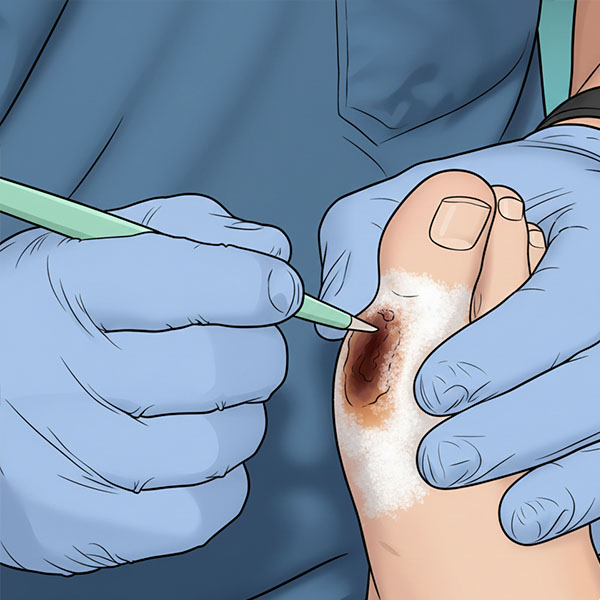
This is a major component of our wound management to prepare the wound bed for optimal granulation and re-epithelialization. Non-viable or necrotic tissue serves as a source of nutrients for the bacteria and also acts as a physical barrier for the granulation and re-epithelialization.

Low-level laser therapy

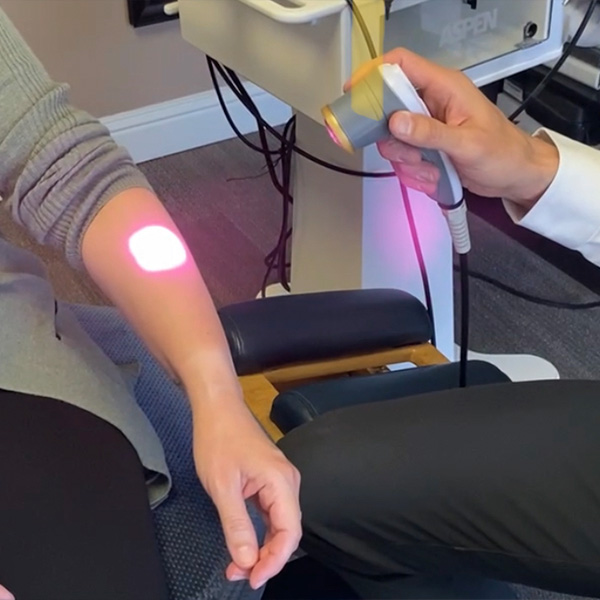
Low-level laser therapy (LLLT), also known as photobiomodulation, supports wound healing by delivering specific wavelengths of light that penetrate the skin and stimulate cellular activity without generating heat. This light energy is absorbed by mitochondria, increasing cellular energy production (ATP) and accelerating tissue repair processes. LLLT helps reduce inflammation and pain while improving local blood flow, which enhances oxygen and nutrient delivery to the wound site. It also promotes collagen synthesis and fibroblast activity, essential for strengthening and rebuilding damaged tissue. As an adjunctive therapy, low-level laser treatment can support faster healing and improved outcomes in acute and chronic wounds when used alongside standard wound care practices.

Low-level laser therapy

Low-level laser therapy (LLLT), also known as photobiomodulation, supports wound healing by delivering specific wavelengths of light that penetrate the skin and stimulate cellular activity without generating heat. This light energy is absorbed by mitochondria, increasing cellular energy production (ATP) and accelerating tissue repair processes. LLLT helps reduce inflammation and pain while improving local blood flow, which enhances oxygen and nutrient delivery to the wound site. It also promotes collagen synthesis and fibroblast activity, essential for strengthening and rebuilding damaged tissue. As an adjunctive therapy, low-level laser treatment can support faster healing and improved outcomes in acute and chronic wounds when used alongside standard wound care practices.

Hyperbaric Oxygen Therapy

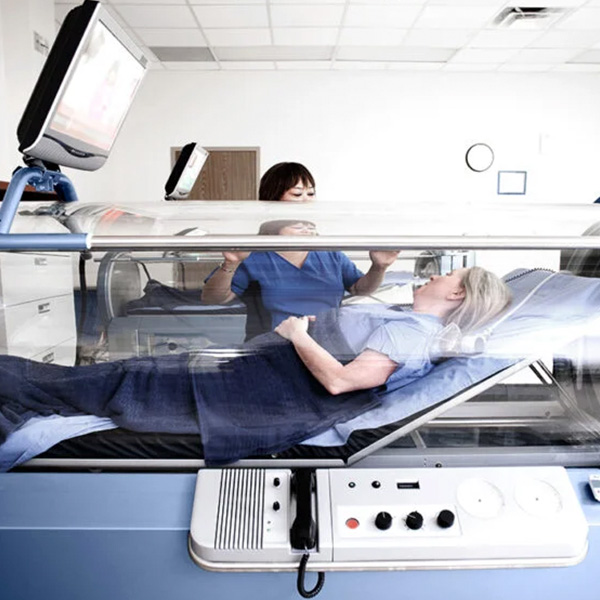
Hyperbaric Oxygen Therapy (HBOT) supports wound healing by delivering 100% oxygen at increased atmospheric pressure, which significantly raises the amount of oxygen dissolved in the bloodstream. This enhanced oxygen delivery reaches damaged or poorly perfused tissues, stimulating new blood vessel formation (angiogenesis) and supporting the growth of healthy tissue. HBOT also helps reduce inflammation and swelling, while improving the body’s ability to fight infection by enhancing white blood cell function. In chronic or non-healing wounds, increased oxygen levels promote collagen production and epithelialization, both essential for tissue repair. As a result, HBOT is commonly used as an adjunctive therapy to accelerate healing and reduce complications in complex wounds such as diabetic ulcers, radiation injuries, and compromised surgical wounds.

Hyperbaric Oxygen Therapy

Hyperbaric Oxygen Therapy (HBOT) supports wound healing by delivering 100% oxygen at increased atmospheric pressure, which significantly raises the amount of oxygen dissolved in the bloodstream. This enhanced oxygen delivery reaches damaged or poorly perfused tissues, stimulating new blood vessel formation (angiogenesis) and supporting the growth of healthy tissue. HBOT also helps reduce inflammation and swelling, while improving the body’s ability to fight infection by enhancing white blood cell function. In chronic or non-healing wounds, increased oxygen levels promote collagen production and epithelialization, both essential for tissue repair. As a result, HBOT is commonly used as an adjunctive therapy to accelerate healing and reduce complications in complex wounds such as diabetic ulcers, radiation injuries, and compromised surgical wounds.

PRP Therapy

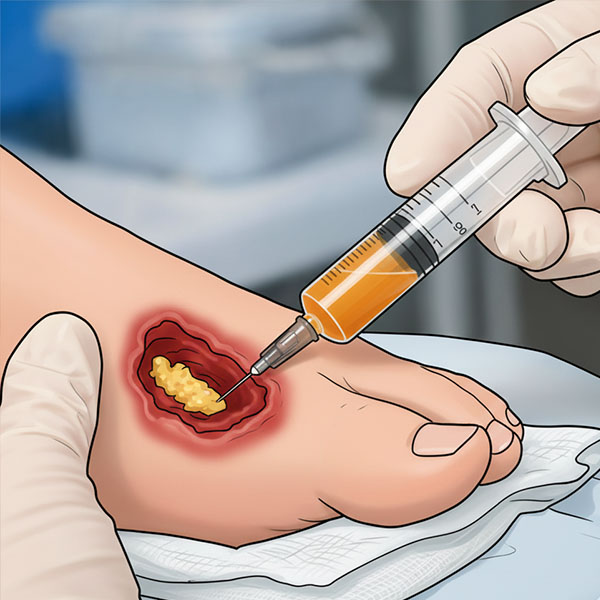
Platelet-Rich Plasma (PRP) supports wound healing by using a concentrated portion of the patient’s own blood that is rich in platelets and growth factors essential for tissue repair. When applied or injected into a wound, PRP releases signaling proteins that stimulate cell regeneration, collagen production, and new blood vessel formation. This process helps accelerate healing by enhancing the body’s natural inflammatory and repair response in a controlled manner. PRP also improves local circulation and supports the development of healthy granulation tissue, which is critical for wound closure. As an adjunctive therapy, PRP is commonly used to promote healing in chronic, non-healing, or complex wounds when standard treatments alone are insufficient.

PRP Therapy

Platelet-Rich Plasma (PRP) supports wound healing by using a concentrated portion of the patient’s own blood that is rich in platelets and growth factors essential for tissue repair. When applied or injected into a wound, PRP releases signaling proteins that stimulate cell regeneration, collagen production, and new blood vessel formation. This process helps accelerate healing by enhancing the body’s natural inflammatory and repair response in a controlled manner. PRP also improves local circulation and supports the development of healthy granulation tissue, which is critical for wound closure. As an adjunctive therapy, PRP is commonly used to promote healing in chronic, non-healing, or complex wounds when standard treatments alone are insufficient.

Ultra Mist

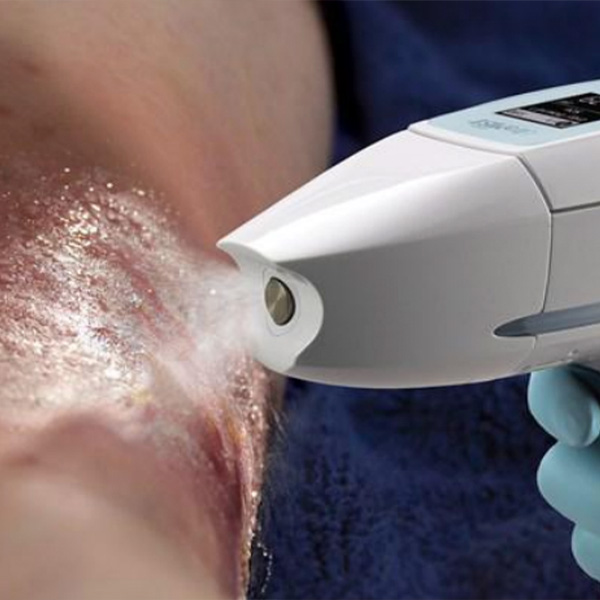
UltraMist therapy is a non-contact, low-frequency ultrasound treatment used in wound care to promote healing by delivering gentle acoustic energy through a saline mist. This energy helps disrupt bacteria, remove devitalized tissue at a microscopic level, and stimulate cellular activity without touching the wound surface, making it comfortable for patients. The therapy also enhances blood flow and oxygen delivery to the wound bed, supporting the formation of healthy granulation tissue. By reducing inflammation and bioburden, UltraMist helps prepare the wound for faster healing and improves the effectiveness of other wound care treatments. It is commonly used as an adjunctive therapy for chronic, non-healing, or complex wounds in both mobile and clinic-based wound care settings.

Ultra Mist

UltraMist therapy is a non-contact, low-frequency ultrasound treatment used in wound care to promote healing by delivering gentle acoustic energy through a saline mist. This energy helps disrupt bacteria, remove devitalized tissue at a microscopic level, and stimulate cellular activity without touching the wound surface, making it comfortable for patients. The therapy also enhances blood flow and oxygen delivery to the wound bed, supporting the formation of healthy granulation tissue. By reducing inflammation and bioburden, UltraMist helps prepare the wound for faster healing and improves the effectiveness of other wound care treatments. It is commonly used as an adjunctive therapy for chronic, non-healing, or complex wounds in both mobile and clinic-based wound care settings.

CT Scan

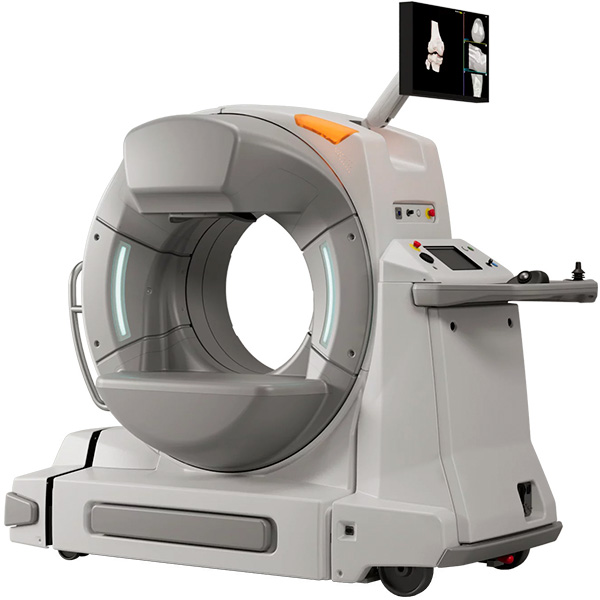
Our advanced imaging solution brings a compact, mobile, multi-modality diagnostic platform directly into clinical environments, combining high-resolution computed tomography (HRCT), digital radiography, and fluoroscopy into a single system to support comprehensive patient evaluation. Designed for flexibility and ease of movement, the system can be maneuvered through standard doorways and quickly deployed at the point of care, making it suitable for emergency rooms, operating rooms, ICUs, specialty offices, and other care settings. With true volumetric imaging and high spatial resolution, the technology delivers detailed 3D anatomical data that enhances visualization of both soft and hard tissues, improving diagnostic confidence and clinical decision-making. The integrated multi-modality approach allows clinicians to perform diagnostic scans, intraoperative imaging, and procedural guidance without needing separate devices or multiple setups

CT Scan

Our advanced imaging solution brings a compact, mobile, multi-modality diagnostic platform directly into clinical environments, combining high-resolution computed tomography (HRCT), digital radiography, and fluoroscopy into a single system to support comprehensive patient evaluation. Designed for flexibility and ease of movement, the system can be maneuvered through standard doorways and quickly deployed at the point of care, making it suitable for emergency rooms, operating rooms, ICUs, specialty offices, and other care settings. With true volumetric imaging and high spatial resolution, the technology delivers detailed 3D anatomical data that enhances visualization of both soft and hard tissues, improving diagnostic confidence and clinical decision-making. The integrated multi-modality approach allows clinicians to perform diagnostic scans, intraoperative imaging, and procedural guidance without needing separate devices or multiple setups

X-Ray

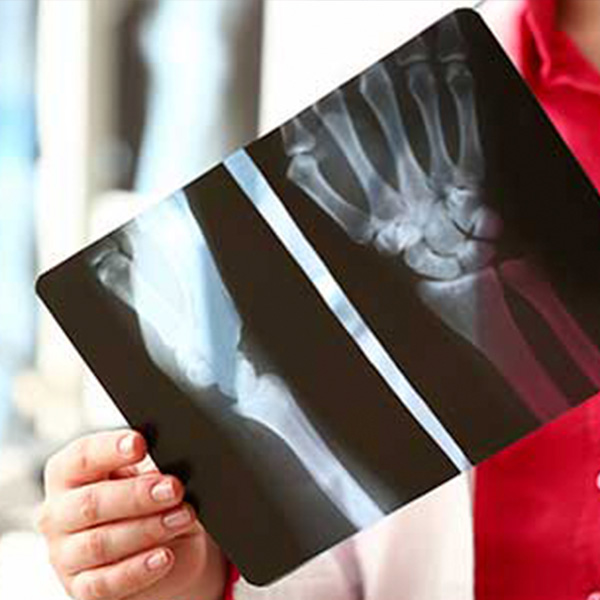
Our digital X-ray service provides fast, high-quality diagnostic imaging directly within clinical and mobile care settings, supporting efficient evaluation of the chest, extremities, and skeletal structures. Designed with a compact footprint, the system integrates easily into existing exam rooms or mobile units, allowing providers to perform imaging without referring patients off-site. Rapid image acquisition and immediate availability enable timely clinical decision-making, documentation, and collaboration across care teams. In a wound care clinic, X-ray imaging is used to evaluate underlying bone and structural involvement that may impact wound healing. It helps clinicians identify complications such as osteomyelitis, foreign bodies, fractures, gas in soft tissues, or deformities that are not visible on surface examination.

X-Ray

Our digital X-ray service provides fast, high-quality diagnostic imaging directly within clinical and mobile care settings, supporting efficient evaluation of the chest, extremities, and skeletal structures. Designed with a compact footprint, the system integrates easily into existing exam rooms or mobile units, allowing providers to perform imaging without referring patients off-site. Rapid image acquisition and immediate availability enable timely clinical decision-making, documentation, and collaboration across care teams. In a wound care clinic, X-ray imaging is used to evaluate underlying bone and structural involvement that may impact wound healing. It helps clinicians identify complications such as osteomyelitis, foreign bodies, fractures, gas in soft tissues, or deformities that are not visible on surface examination.

Guided Ultrasound

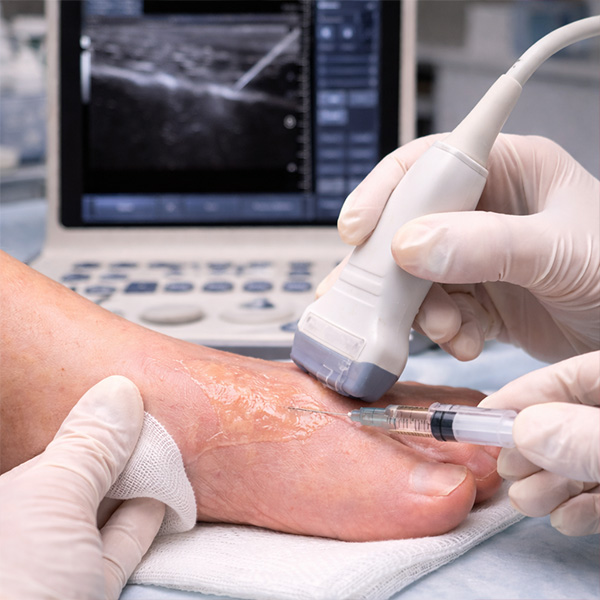
Guided ultrasound supports wound healing by allowing clinicians to visualize structures beneath the wound surface that are not visible on physical examination. It helps identify fluid collections, abscesses, tunneling, undermining, foreign bodies, and tissue depth, enabling more accurate diagnosis and targeted treatment. Ultrasound guidance can also be used to safely direct procedures such as aspirations, injections, debridement planning, or placement of advanced therapies while minimizing damage to surrounding tissue. By improving precision, guided ultrasound helps reduce complications and supports earlier intervention when problems are detected. When integrated into wound care, it enhances clinical decision-making and promotes more effective, data-driven healing strategies.

Guided Ultrasound

Guided ultrasound supports wound healing by allowing clinicians to visualize structures beneath the wound surface that are not visible on physical examination. It helps identify fluid collections, abscesses, tunneling, undermining, foreign bodies, and tissue depth, enabling more accurate diagnosis and targeted treatment. Ultrasound guidance can also be used to safely direct procedures such as aspirations, injections, debridement planning, or placement of advanced therapies while minimizing damage to surrounding tissue. By improving precision, guided ultrasound helps reduce complications and supports earlier intervention when problems are detected. When integrated into wound care, it enhances clinical decision-making and promotes more effective, data-driven healing strategies.