
Pressure ulcers
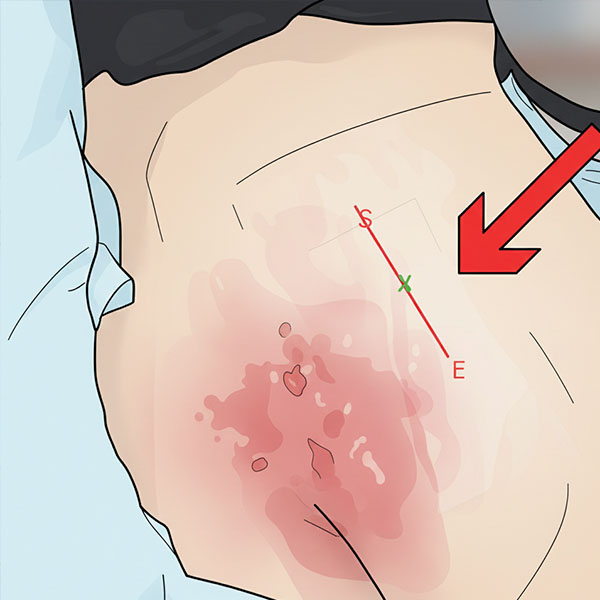
Pressure injuries occur when prolonged or repeated pressure, shear, or friction restricts blood flow to the skin and underlying tissues, leading to tissue ischemia and breakdown. This is most common over bony prominences such as the heels, sacrum, hips, and elbows, particularly in patients with limited mobility, neurological impairment, or poor circulation. In mobile wound care settings, pressure is addressed through regular repositioning, offloading techniques, protective dressings, and patient or caregiver education, allowing early intervention in home or long-term care environments. In the clinic, clinicians can implement advanced offloading devices, pressure-redistributing surfaces, sharp debridement, and adjunctive therapies to promote healing and prevent further tissue damage. By combining consistent pressure relief with proper wound management and monitoring, both mobile and clinic-based wound care play a critical role in preventing and treating pressure-related wounds
Pressure ulcers
Pressure injuries occur when prolonged or repeated pressure, shear, or friction restricts blood flow to the skin and underlying tissues, leading to tissue ischemia and breakdown. This is most common over bony prominences such as the heels, sacrum, hips, and elbows, particularly in patients with limited mobility, neurological impairment, or poor circulation. In mobile wound care settings, pressure is addressed through regular repositioning, offloading techniques, protective dressings, and patient or caregiver education, allowing early intervention in home or long-term care environments. In the clinic, clinicians can implement advanced offloading devices, pressure-redistributing surfaces, sharp debridement, and adjunctive therapies to promote healing and prevent further tissue damage. By combining consistent pressure relief with proper wound management and monitoring, both mobile and clinic-based wound care play a critical role in preventing and treating pressure-related wounds
Venous stasis ulcers
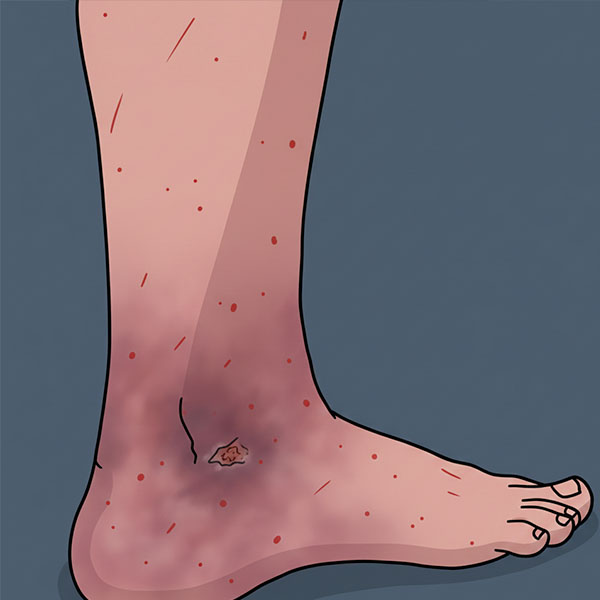
Venous stasis ulcers develop when chronic venous insufficiency impairs blood return from the legs to the heart, leading to increased venous pressure, fluid leakage, inflammation, and eventual skin breakdown—most commonly around the ankles and lower legs. Over time, this poor circulation deprives tissues of oxygen and nutrients, making wounds slow to heal and prone to recurrence. In mobile wound care settings, venous ulcers are addressed through compression therapy, routine wound assessment, dressing changes, edema management, and patient education, allowing consistent care for patients with mobility limitations. In the clinic, providers can implement advanced compression systems, diagnostic evaluation (such as vascular studies), debridement, and adjunctive therapies to accelerate healing and address underlying venous disease. Coordinated mobile and clinic-based care helps reduce swelling, improve circulation, and promote durable healing while lowering the risk of complications and recurrence.
Venous stasis ulcers
Venous stasis ulcers develop when chronic venous insufficiency impairs blood return from the legs to the heart, leading to increased venous pressure, fluid leakage, inflammation, and eventual skin breakdown—most commonly around the ankles and lower legs. Over time, this poor circulation deprives tissues of oxygen and nutrients, making wounds slow to heal and prone to recurrence. In mobile wound care settings, venous ulcers are addressed through compression therapy, routine wound assessment, dressing changes, edema management, and patient education, allowing consistent care for patients with mobility limitations. In the clinic, providers can implement advanced compression systems, diagnostic evaluation (such as vascular studies), debridement, and adjunctive therapies to accelerate healing and address underlying venous disease. Coordinated mobile and clinic-based care helps reduce swelling, improve circulation, and promote durable healing while lowering the risk of complications and recurrence.
Diabetic/neuropathic ulcers
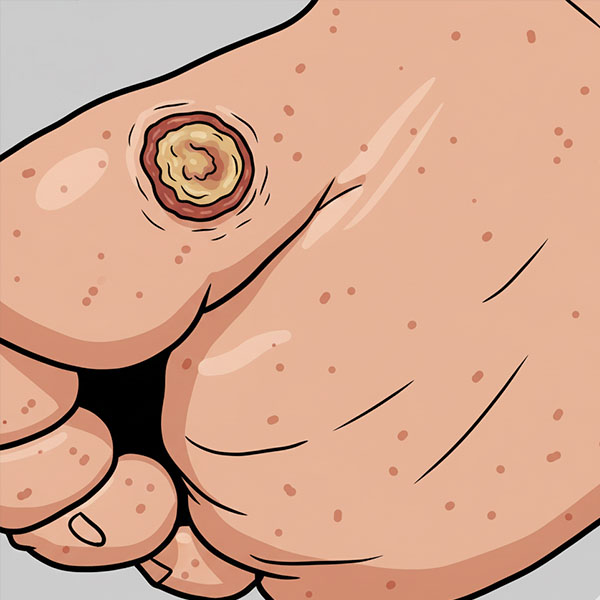
Diabetic and neuropathic ulcers develop when nerve damage and poor circulation reduce sensation in the feet, allowing repetitive pressure or minor injuries to go unnoticed and progress into open wounds. Elevated blood glucose further impairs immune response and tissue repair, increasing the risk of infection and delayed healing. In mobile wound care settings, these ulcers are addressed through regular wound assessments, offloading strategies, dressing changes, glucose-management education, and close monitoring, helping prevent progression in patients with limited mobility. In the clinic, providers can implement advanced offloading devices, debridement, vascular evaluation, imaging, and adjunctive therapies to promote healing and reduce complications. Coordinated mobile and clinic-based care is essential to restore tissue integrity, prevent infection, and lower the risk of recurrence or amputation.
Diabetic/neuropathic ulcers
Diabetic and neuropathic ulcers develop when nerve damage and poor circulation reduce sensation in the feet, allowing repetitive pressure or minor injuries to go unnoticed and progress into open wounds. Elevated blood glucose further impairs immune response and tissue repair, increasing the risk of infection and delayed healing. In mobile wound care settings, these ulcers are addressed through regular wound assessments, offloading strategies, dressing changes, glucose-management education, and close monitoring, helping prevent progression in patients with limited mobility. In the clinic, providers can implement advanced offloading devices, debridement, vascular evaluation, imaging, and adjunctive therapies to promote healing and reduce complications. Coordinated mobile and clinic-based care is essential to restore tissue integrity, prevent infection, and lower the risk of recurrence or amputation.
Surgical wounds
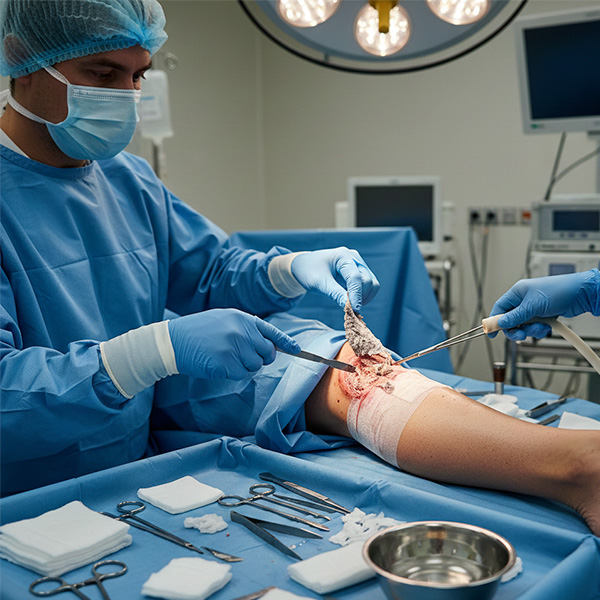
Surgical wounds occur when the skin and underlying tissues are intentionally incised during an operative procedure and may be complicated by factors such as infection, poor circulation, tension on the incision, or underlying medical conditions. While many surgical wounds heal as expected, delayed healing can occur due to edema, hematoma formation, wound dehiscence, or compromised immune response. In mobile wound care settings, surgical wounds can be managed through routine assessment, dressing changes, infection monitoring, patient education, and early identification of complications, allowing care to continue safely at home or in post-acute settings. In the clinic, providers can deliver advanced interventions such as debridement, imaging, compression or offloading when appropriate, and adjunctive therapies to support healing. Coordinated mobile and clinic-based care helps promote timely recovery, reduce hospital readmissions, and support optimal surgical outcomes.
Surgical wounds
Surgical wounds occur when the skin and underlying tissues are intentionally incised during an operative procedure and may be complicated by factors such as infection, poor circulation, tension on the incision, or underlying medical conditions. While many surgical wounds heal as expected, delayed healing can occur due to edema, hematoma formation, wound dehiscence, or compromised immune response. In mobile wound care settings, surgical wounds can be managed through routine assessment, dressing changes, infection monitoring, patient education, and early identification of complications, allowing care to continue safely at home or in post-acute settings. In the clinic, providers can deliver advanced interventions such as debridement, imaging, compression or offloading when appropriate, and adjunctive therapies to support healing. Coordinated mobile and clinic-based care helps promote timely recovery, reduce hospital readmissions, and support optimal surgical outcomes.
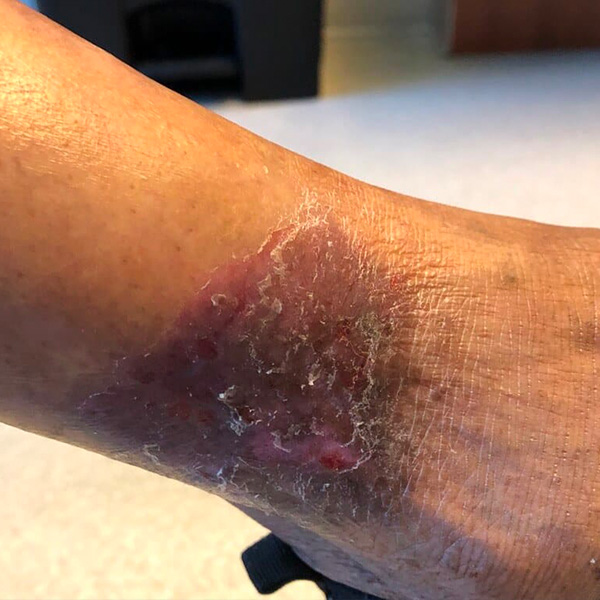
Non-pressure Chronic ulcer
Non-pressure chronic ulcers develop when underlying vascular disease, metabolic conditions, trauma, or prolonged inflammation impair normal tissue repair, leading to wounds that fail to progress through the normal stages of healing. Common causes include arterial insufficiency, venous disease, diabetes, autoimmune conditions, and repeated minor trauma, often affecting the lower extremities. In mobile wound care settings, these ulcers are managed through regular wound assessments, dressing changes, circulation support measures, risk-factor education, and close monitoring, allowing consistent care for patients with limited mobility. In the clinic, providers can perform diagnostic evaluation, debridement, advanced wound therapies, compression or revascularization referrals when indicated, and adjunctive treatments to address the underlying cause. A coordinated approach between mobile and clinic-based wound care helps restore healing potential, reduce complications, and support long-term wound closure.
Non-pressure Chronic ulcer
Non-pressure chronic ulcers develop when underlying vascular disease, metabolic conditions, trauma, or prolonged inflammation impair normal tissue repair, leading to wounds that fail to progress through the normal stages of healing. Common causes include arterial insufficiency, venous disease, diabetes, autoimmune conditions, and repeated minor trauma, often affecting the lower extremities. In mobile wound care settings, these ulcers are managed through regular wound assessments, dressing changes, circulation support measures, risk-factor education, and close monitoring, allowing consistent care for patients with limited mobility. In the clinic, providers can perform diagnostic evaluation, debridement, advanced wound therapies, compression or revascularization referrals when indicated, and adjunctive treatments to address the underlying cause. A coordinated approach between mobile and clinic-based wound care helps restore healing potential, reduce complications, and support long-term wound closure.
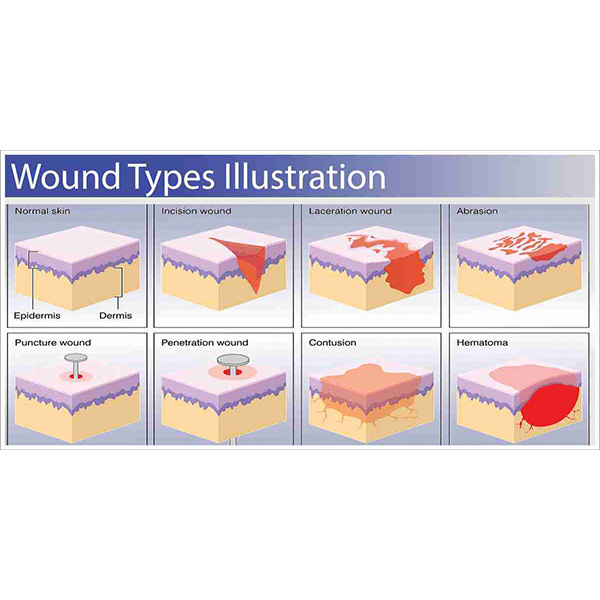
Traumatic wounds
Traumatic wounds occur as a result of sudden injury to the skin and underlying tissues, such as lacerations, abrasions, punctures, crush injuries, or blunt-force trauma. These wounds may be complicated by contamination, tissue damage, bleeding, or infection depending on the mechanism and severity of injury. In mobile wound care settings, traumatic wounds can be managed through initial assessment, cleansing, dressing changes, infection monitoring, and patient education, allowing timely care in the home or post-acute environment. In the clinic, providers can deliver advanced interventions such as imaging, debridement, suturing or closure support, and adjunctive therapies to promote proper healing. Coordinated mobile and clinic-based care helps reduce complications, supports tissue repair, and improves overall recovery outcomes.
Traumatic wounds
Traumatic wounds occur as a result of sudden injury to the skin and underlying tissues, such as lacerations, abrasions, punctures, crush injuries, or blunt-force trauma. These wounds may be complicated by contamination, tissue damage, bleeding, or infection depending on the mechanism and severity of injury. In mobile wound care settings, traumatic wounds can be managed through initial assessment, cleansing, dressing changes, infection monitoring, and patient education, allowing timely care in the home or post-acute environment. In the clinic, providers can deliver advanced interventions such as imaging, debridement, suturing or closure support, and adjunctive therapies to promote proper healing. Coordinated mobile and clinic-based care helps reduce complications, supports tissue repair, and improves overall recovery outcomes.
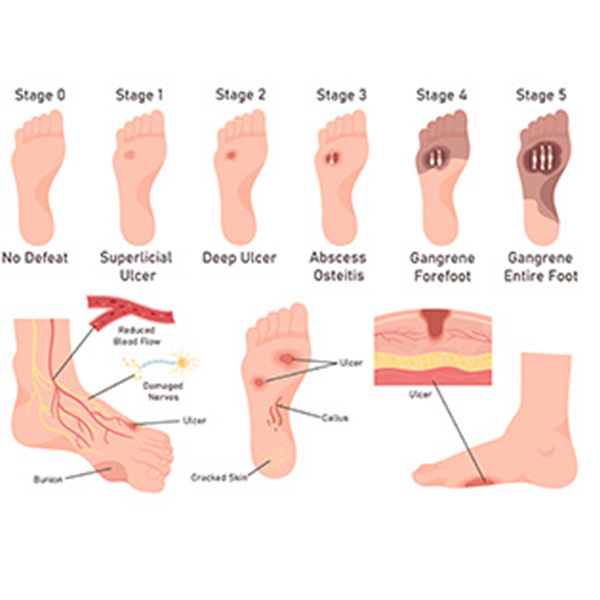
Arterial/ischemic ulcers
Arterial (ischemic) ulcers occur when reduced blood flow due to peripheral arterial disease deprives tissues of oxygen and nutrients, leading to skin breakdown—most commonly on the toes, feet, or pressure points of the lower extremities. These wounds are often painful, slow to heal, and may worsen with elevation due to compromised circulation. In mobile wound care settings, management focuses on gentle wound care, infection prevention, protection from trauma, pain monitoring, and coordination with vascular providers, allowing close observation in patients with limited mobility. In the clinic, clinicians can perform vascular assessments, imaging, debridement when appropriate, and initiate referrals for revascularization or advanced therapies to restore blood flow. A coordinated mobile and clinic-based approach is essential to improve circulation, support healing, and reduce the risk of limb-threatening complications
Arterial/ischemic ulcers
Arterial (ischemic) ulcers occur when reduced blood flow due to peripheral arterial disease deprives tissues of oxygen and nutrients, leading to skin breakdown—most commonly on the toes, feet, or pressure points of the lower extremities. These wounds are often painful, slow to heal, and may worsen with elevation due to compromised circulation. In mobile wound care settings, management focuses on gentle wound care, infection prevention, protection from trauma, pain monitoring, and coordination with vascular providers, allowing close observation in patients with limited mobility. In the clinic, clinicians can perform vascular assessments, imaging, debridement when appropriate, and initiate referrals for revascularization or advanced therapies to restore blood flow. A coordinated mobile and clinic-based approach is essential to improve circulation, support healing, and reduce the risk of limb-threatening complications